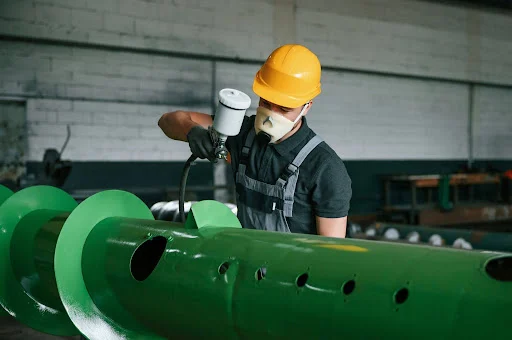
At Jergens, industrial coatings are important for protecting equipment and infrastructure. These engineered systems shield materials from corrosion, chemicals, abrasion, and harsh environments.
Industrial environments expose surfaces to elements that cause deterioration, causing costly repairs and downtime. Coatings act as barriers, maintaining durability and extending asset life.
Why Industrial Coatings Are Important
Industrial coatings preserve the integrity of materials and improve operational efficiency. When we apply them correctly, they deliver several important benefits:
- Corrosion resistance that protects metal from rust and oxidation
- Chemical protection in environments with exposure to harsh substances
- Improved durability against wear, impact, and abrasion
- Extended lifespan of equipment and infrastructure
- Enhanced safety by maintaining structural reliability
Selecting the right coating requires more than technical decision-making. You invest in performance and reliability with your choice.
Types of Industrial Coatings and Where They Work Best
Engineers design different coatings to handle specific conditions. Understanding each type’s performance ensures you choose the right solution.
1. Polyurethane Coatings
Polyurethane coatings deliver durability and resist environmental damage.
Best for:
- Outdoor equipment
- Surfaces exposed to sunlight
- Applications requiring a smooth, high-quality finish
They are commonly used as a topcoat because they maintain color and resist UV exposure.
2. Epoxy Coatings
Epoxy coatings strongly adhere to surfaces and resist chemicals and heat.
Common uses include:
- Industrial flooring
- Storage tanks
- Pipelines
They form tough protective layers but usually need a topcoat in direct sunlight.
3. Alkyd Coatings
Alkyd coatings provide a cost-effective solution for environments requiring moderate protection.
Ideal for:
- General maintenance projects
- Indoor and outdoor applications
- Areas with limited exposure to harsh conditions
Many choose them for practicality and wide use, though they offer less durability than advanced coatings.
4. Zinc Rich Coatings
Zinc-rich coatings deliver essential corrosion protection for steel surfaces.
Common applications:
- Structural steel
- Bridges and infrastructure
- Marine and high-humidity environments
These coatings protect the underlying metal by sacrificing their zinc layer, making them highly effective as primers.
5. Acrylic Coatings
Acrylic coatings dry quickly and produce a consistent finish.
Best suited for:
- Roofing systems
- Metal surfaces
- Projects requiring fast application
They adhere well and maintain their appearance over time.
6. Ceramic Coatings
Ceramic coatings withstand extreme environments and provide excellent heat and chemical resistance.
Used in:
- High-temperature equipment
- Tanks and piping systems
- Industrial processing facilities
They provide strong insulation and durability, but are best used in areas with minimal physical stress.
How to Choose the Right Coating
Choosing the right industrial coating depends on several factors:
- Environmental conditions such as moisture, chemicals, and UV exposure
- Surface material including steel, concrete, or other substrates
- Performance requirements like heat resistance or abrasion protection
- Maintenance expectations and budget
Consider these factors to ensure better performance and longer-lasting results.
Industrial coatings maintain efficiency, safety, and durability in industrial operations. When you understand the different types and their applications, you make smarter decisions and achieve better outcomes.
Ready to Protect Your Assets with Jergens
At Jergens, we help businesses choose the best solutions to protect equipment and infrastructure. Whether you want to improve durability, reduce maintenance costs, or extend asset life, our team is here to support you.
Contact us now to find the best industrial coating solution for your needs.